
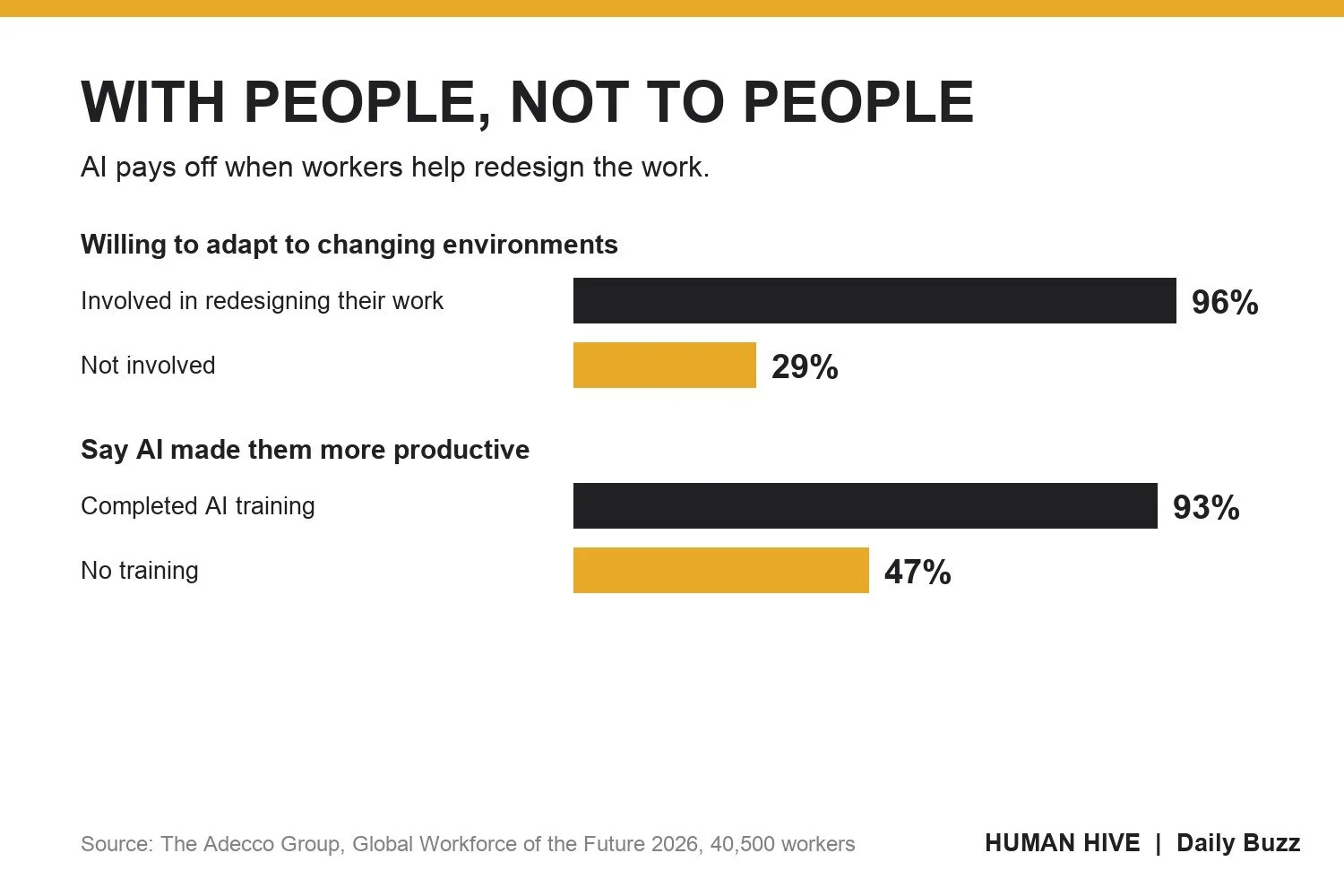
AI Pays Off When Workers Help Redesign the Work: What 40,500 Workers Just Told Leaders
Workers who help redesign their work are far more willing to adapt to AI: 96% versus 29%.
AI training is shrinking even though 93% of trained users say AI made them more productive, against 47% of untrained users.
This week, ask one team to map one workflow with you before any new AI tool touches it.
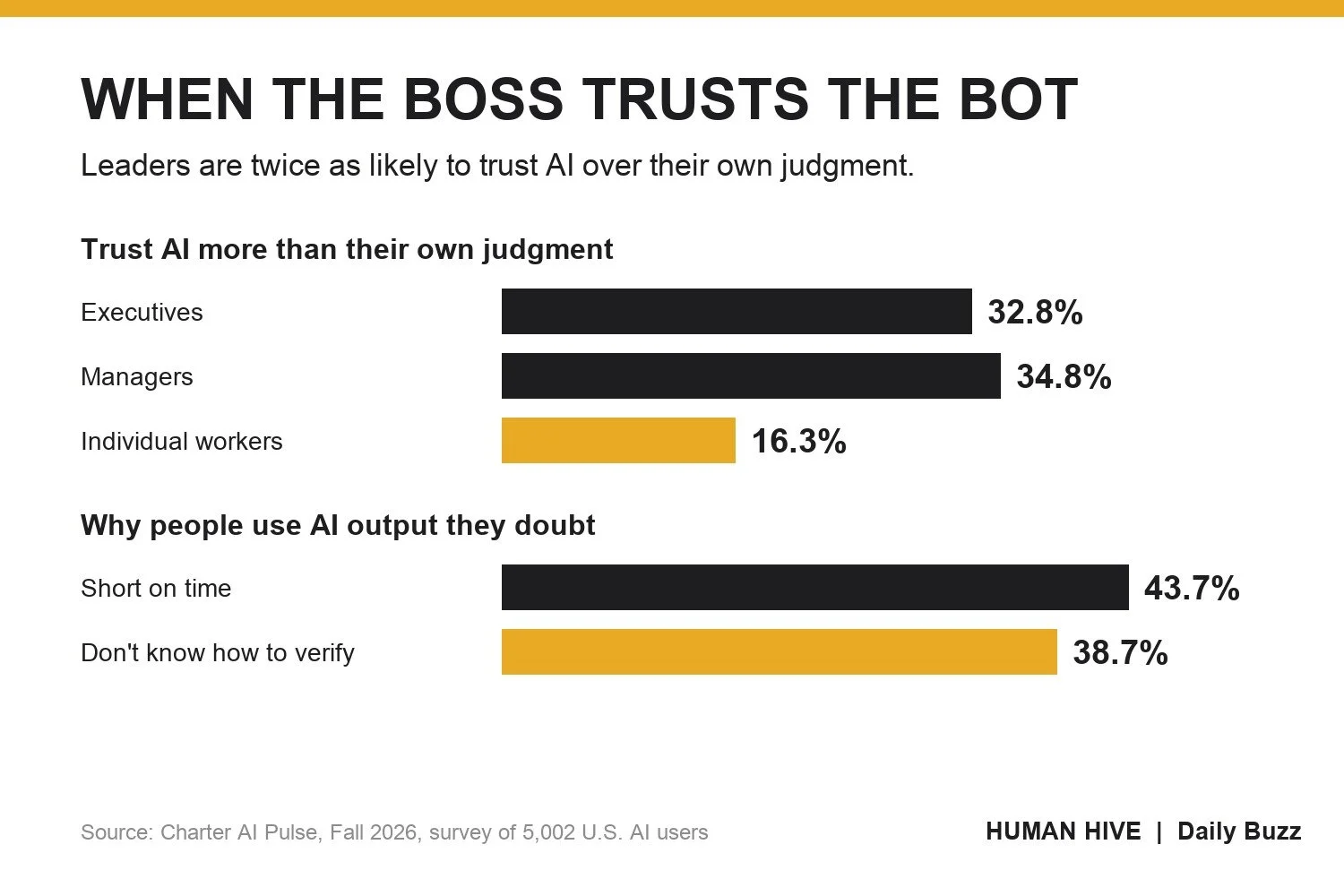
When the Boss Trusts the Bot: A Third of Managers Now Trust AI Over Their Own Judgment
Managers and executives are about twice as likely as workers to trust AI over their own judgment. The top reason people use AI output they doubt is time pressure, not trust. This week, name the three decisions on your team that always get a human check before anyone acts.
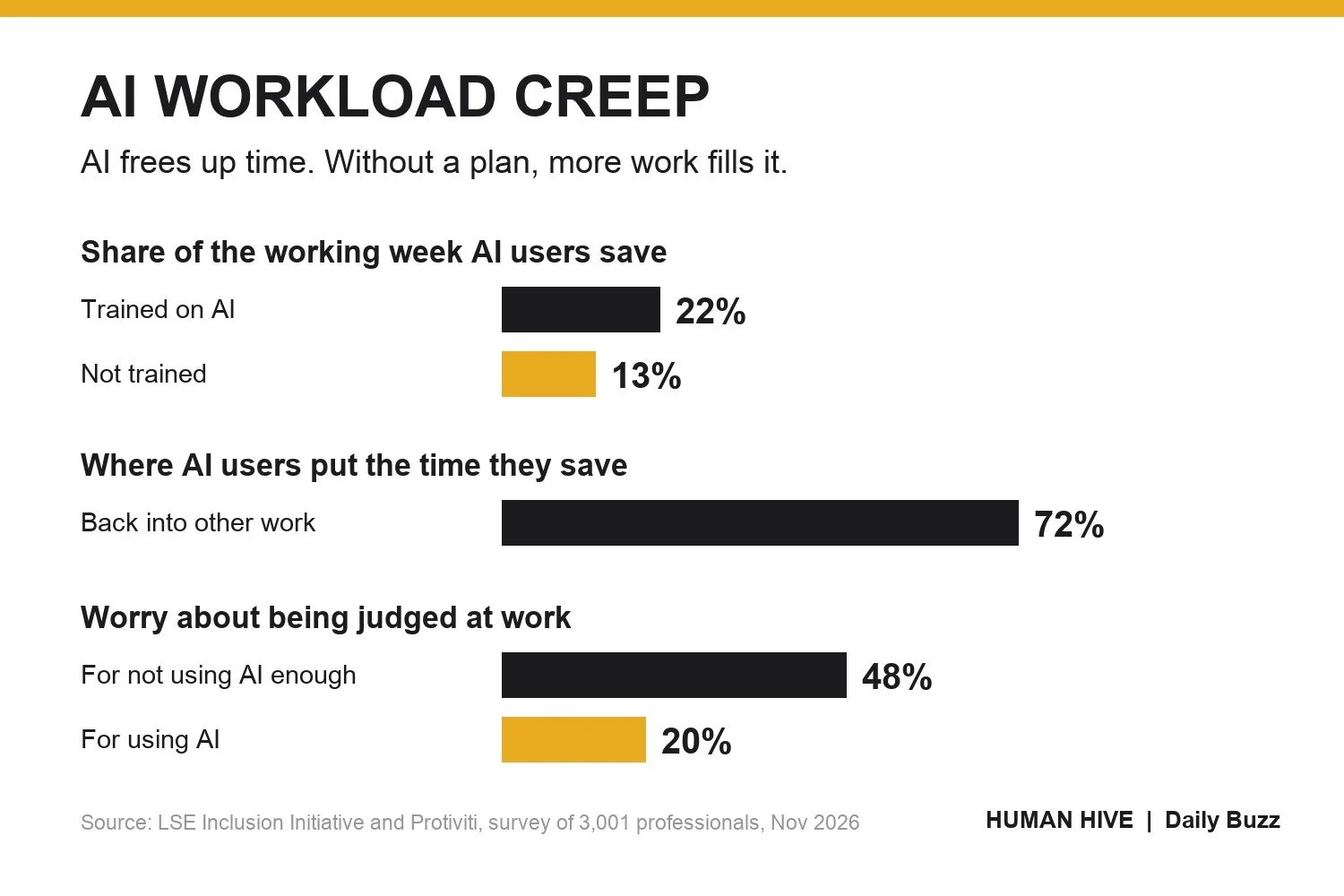
AI Workload Creep: Your Team Saves 19% of Its Week With AI. Who Decides Where That Time Goes?
AI users save about a fifth of their week, but most of that time quietly turns into more work.
Trained employees save 22% of their hours; untrained employees save 13%.
This week, decide out loud with your team what one saved hour each week is for.
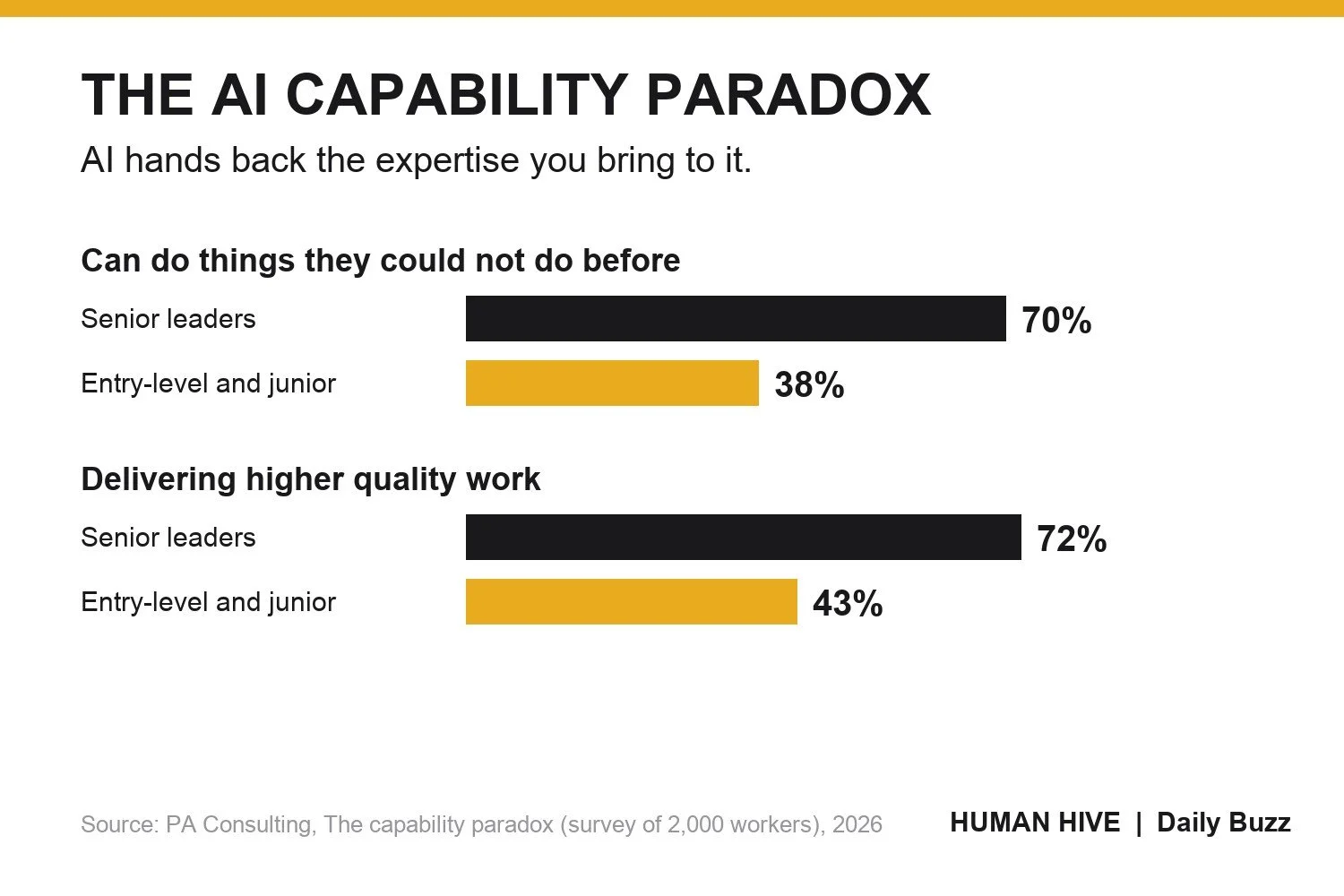
The AI Capability Paradox: Why Senior Leaders Win With AI and Junior Staff Fall Behind
PA Consulting found 70% of senior leaders say AI lets them do things they could not do before, compared with 38% of entry-level and junior staff. The difference is judgment: experienced people know what good looks like, so they can challenge what AI gives them. This week, make one junior teammate explain why an AI-shaped draft is right before it goes out.
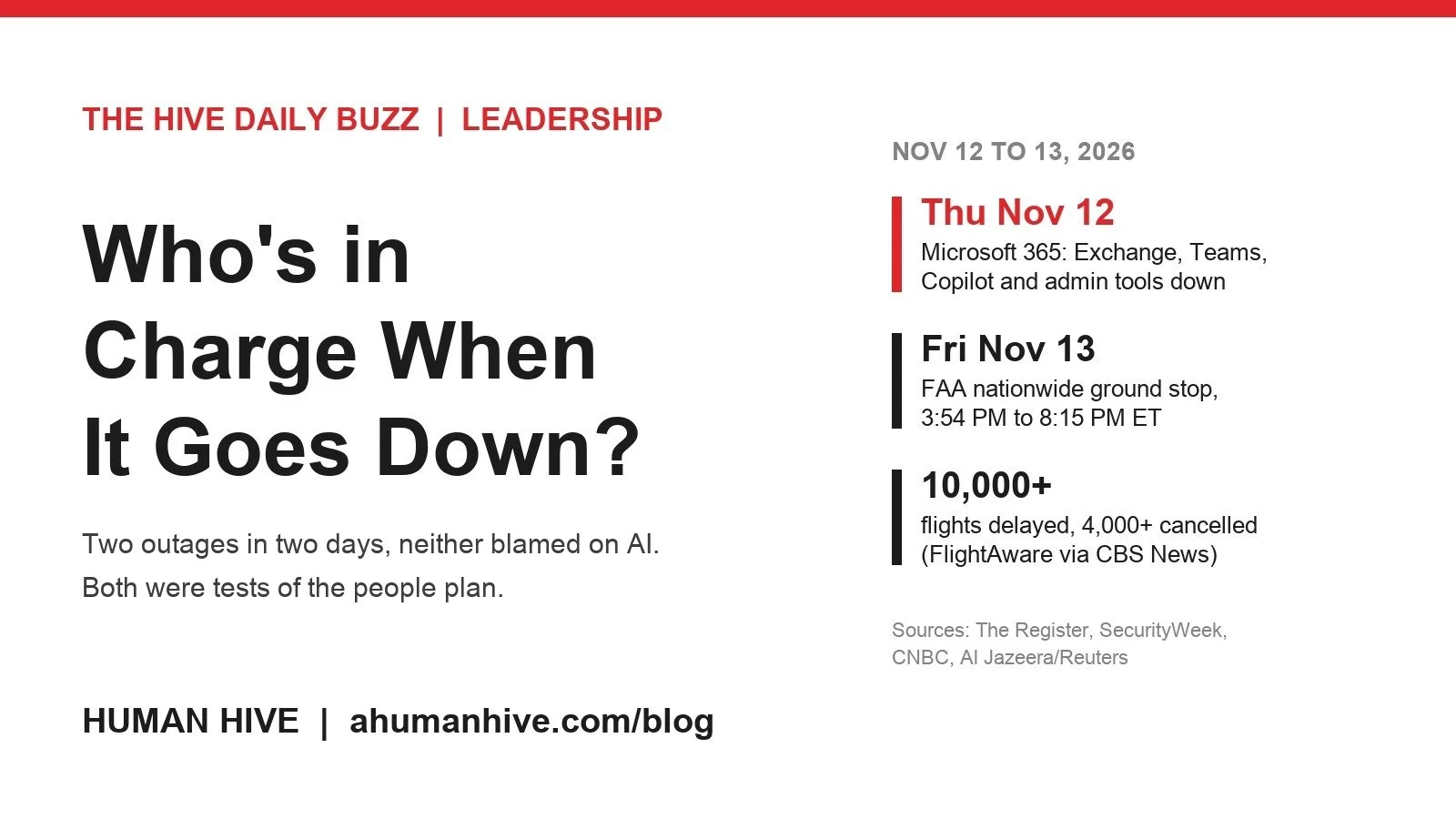
Who’s in Charge When the Systems Go Down? What Microsoft’s and the FAA’s Outages Teach Every Team
Microsoft 365 failed on November 12 and the FAA stopped every U.S. departure on November 13.
Uptime Institute says failures to follow procedures are still the top human cause of outages.
This week, name who makes the call when a key tool goes dark, and run a 15-minute drill.
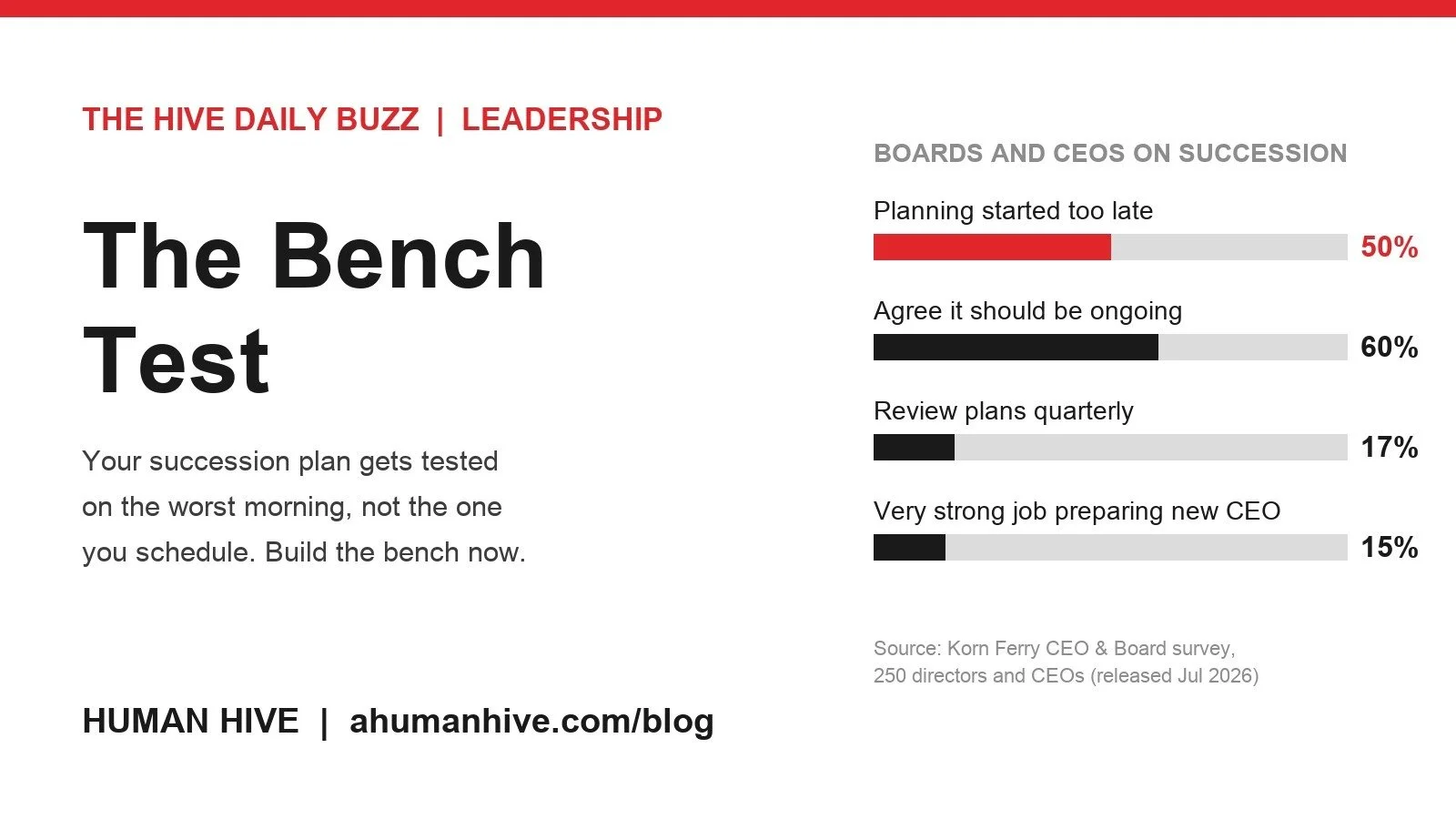
The Bench Test: What Nvidia’s Overnight CEO Change Teaches Every Team About Succession
Nvidia named its CFO interim CEO the same day its co-founder resigned, and said its roadmap would continue without interruption. Korn Ferry found half of boards say succession planning started too late in their last CEO transition. This week, name two people who could cover each critical role on your team, and start writing down the reasons behind your decisions.
The Future Has No Manners: The New Human Rules
Mitch Mitchem’s new human rules for a world moving faster than we are. Seven rules for staying in charge as AI takes on more of the work, from never surrendering your judgment to amplifying what makes us human. As the machines get more human, are we?
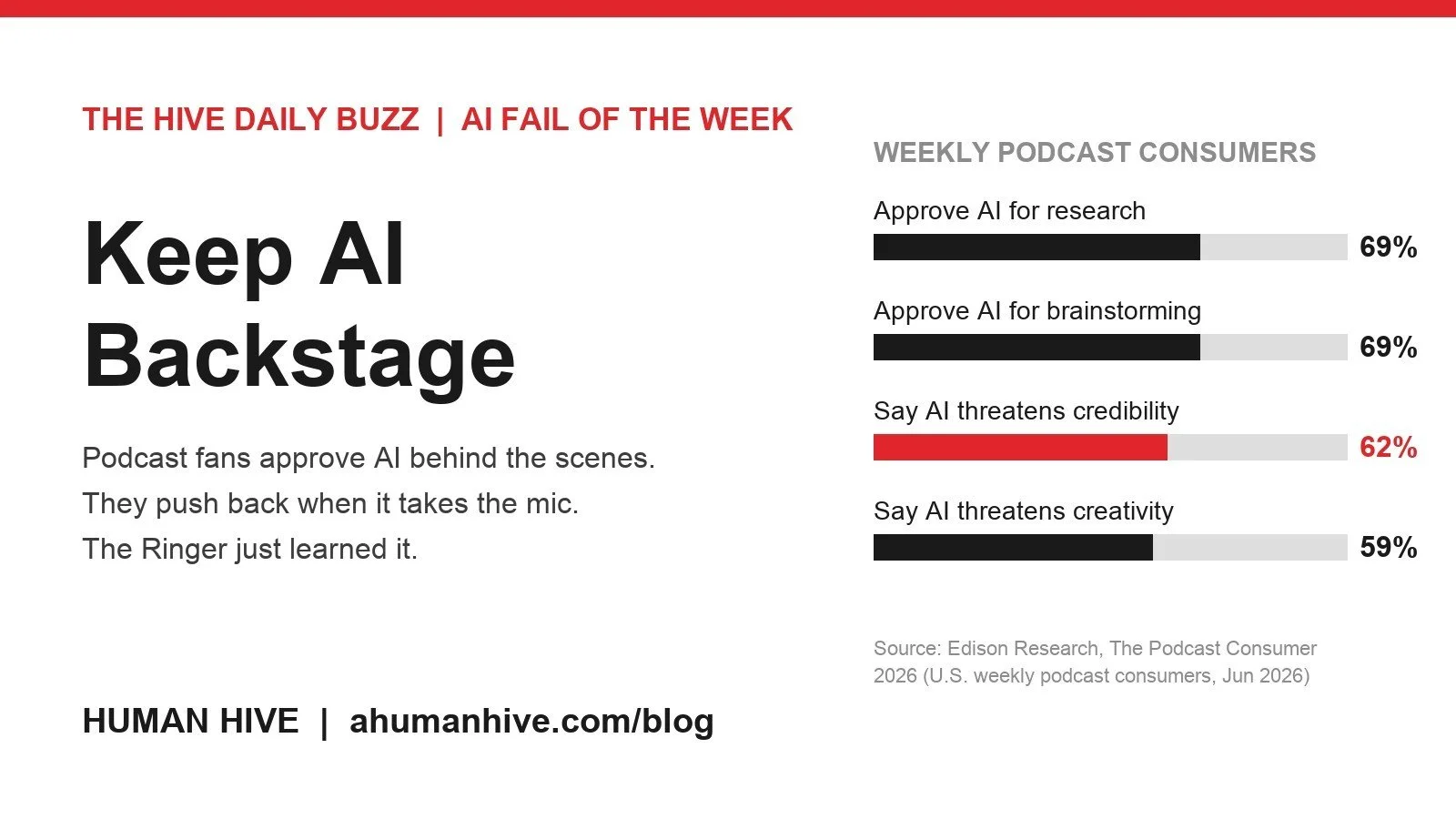
AI Fail of the Week: The Ringer’s ChatGPT Segments and the Backstage Rule for AI
The Ringer ended a ChatGPT sponsorship after listeners rejected AI segments built into its shows. Listeners approve of AI for research, but not when it replaces the human voice they came for. Before AI touches anything a customer sees or hears, test it with real customers and listen to the insider who says no.
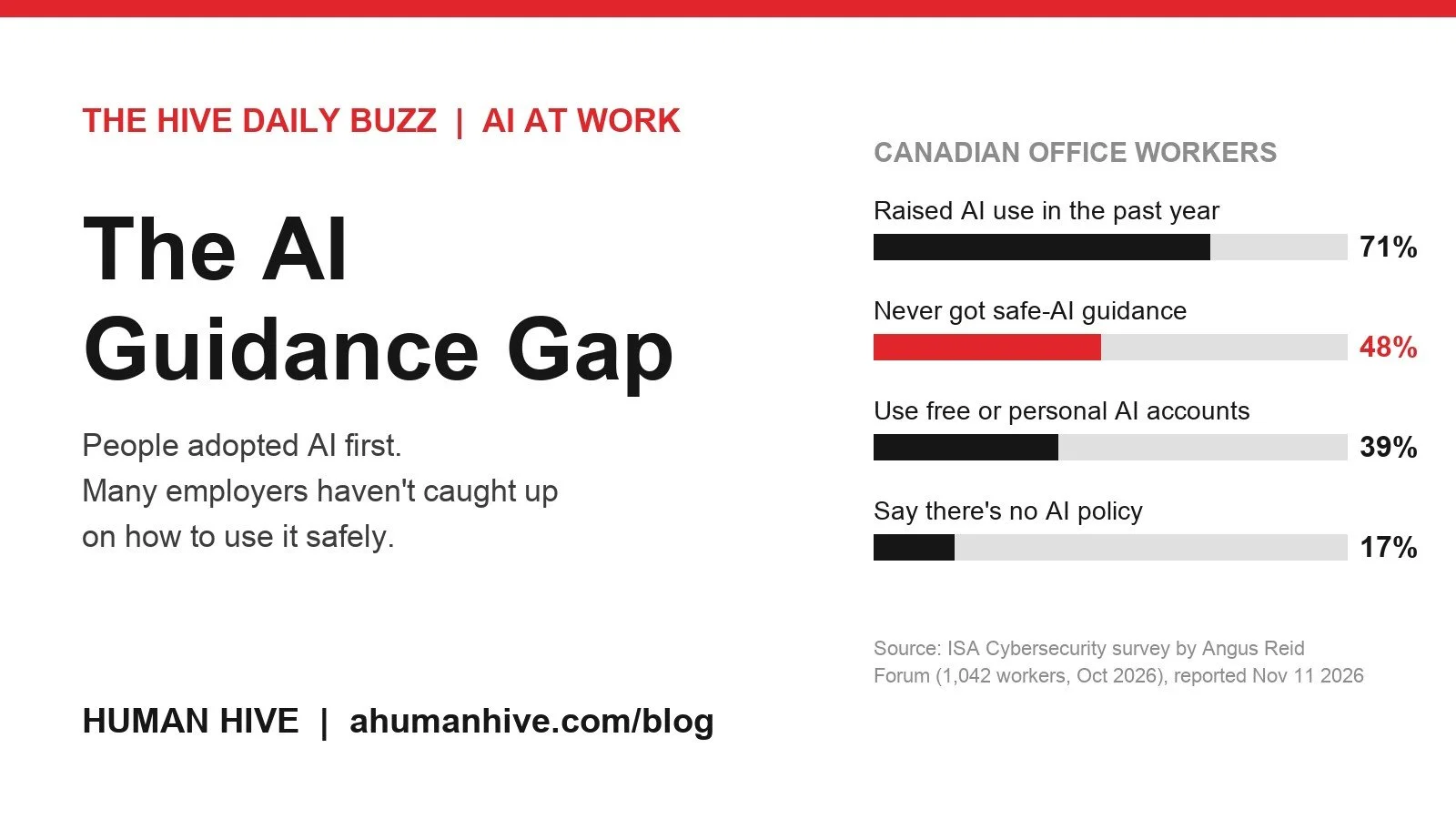
The AI Guidance Gap: 48% of Workers Say No One Showed Them How to Use AI Safely
Nearly half of office workers surveyed say their employer never told them how to use AI safely at work. When no one sets the rules, people pick their own tools, and company data goes wherever the free tool takes it. This week, write a one-page AI guide with three lists: tools you can use, data you never paste, and who to ask.
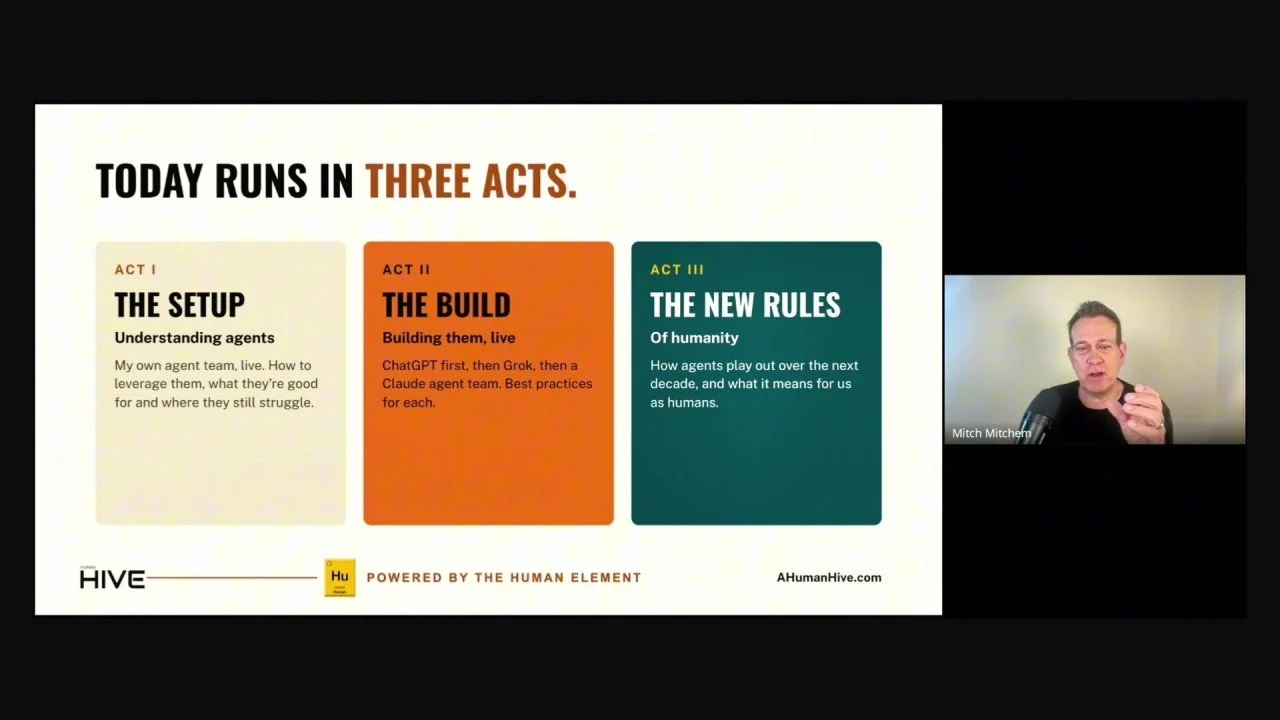
Your AI Agent Is Not a Genie: How to Build One That Actually Works, From the Class I Taught Monday
On Monday I spent the morning with a small group of leaders who wanted to go deep on AI agents: a recruiting CEO, a corporate trainer, someone building agents for a travel technology company, and an HR leader. Because the room was small we could slow down, build things live, break a few of them, and talk honestly about what goes wrong.
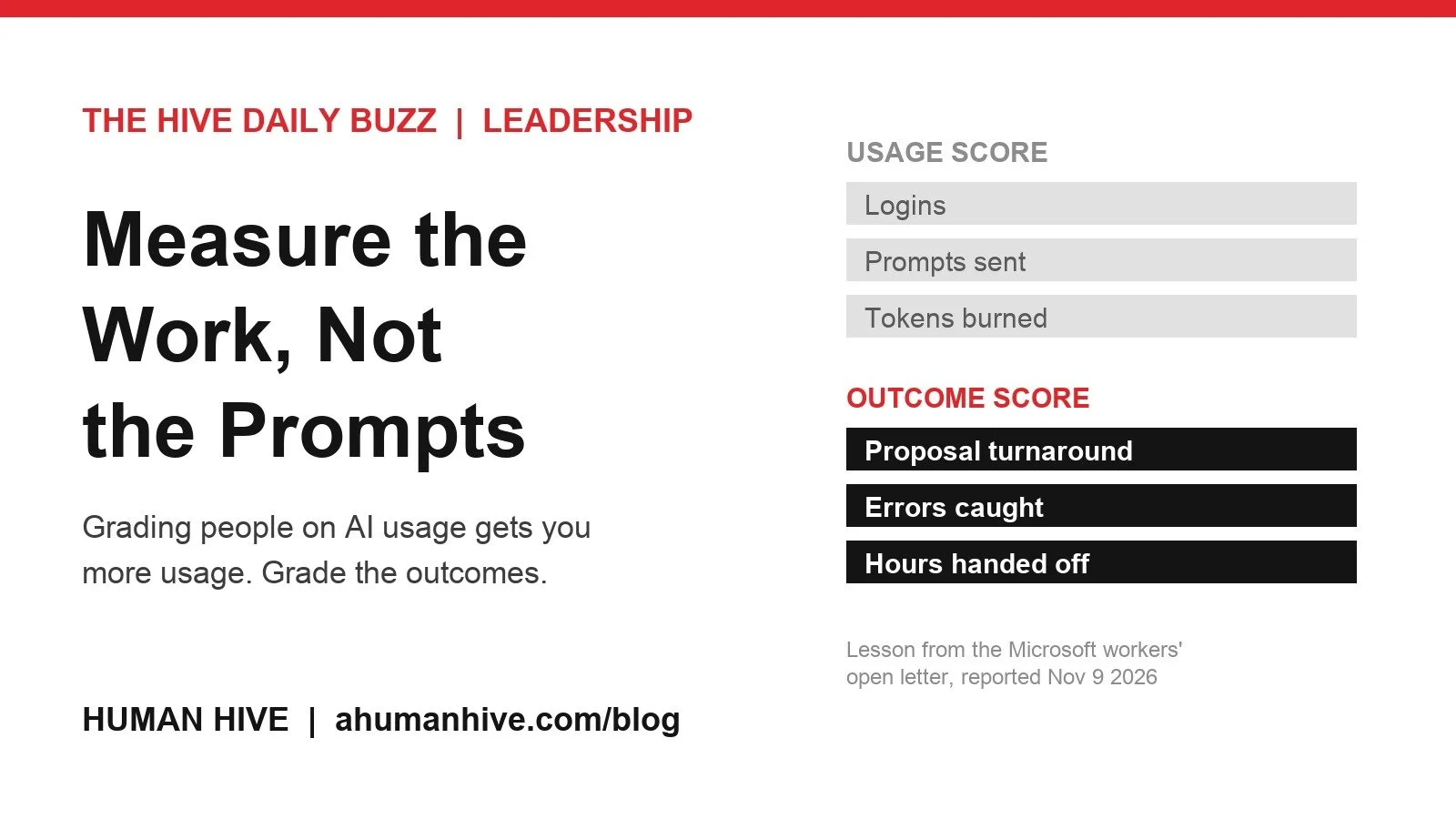
AI Usage Is Not a Performance Metric: What Microsoft Workers’ Open Letter Teaches Leaders
Current and former Microsoft employees circulated an open letter asking for a say in how AI is used at work and an end to tying AI use to rewards or reprimands. When usage becomes the score, people perform usage: more prompts, more tokens, same or worse work. This week, swap one usage metric for one outcome metric and ask your team what AI is actually helping them finish.
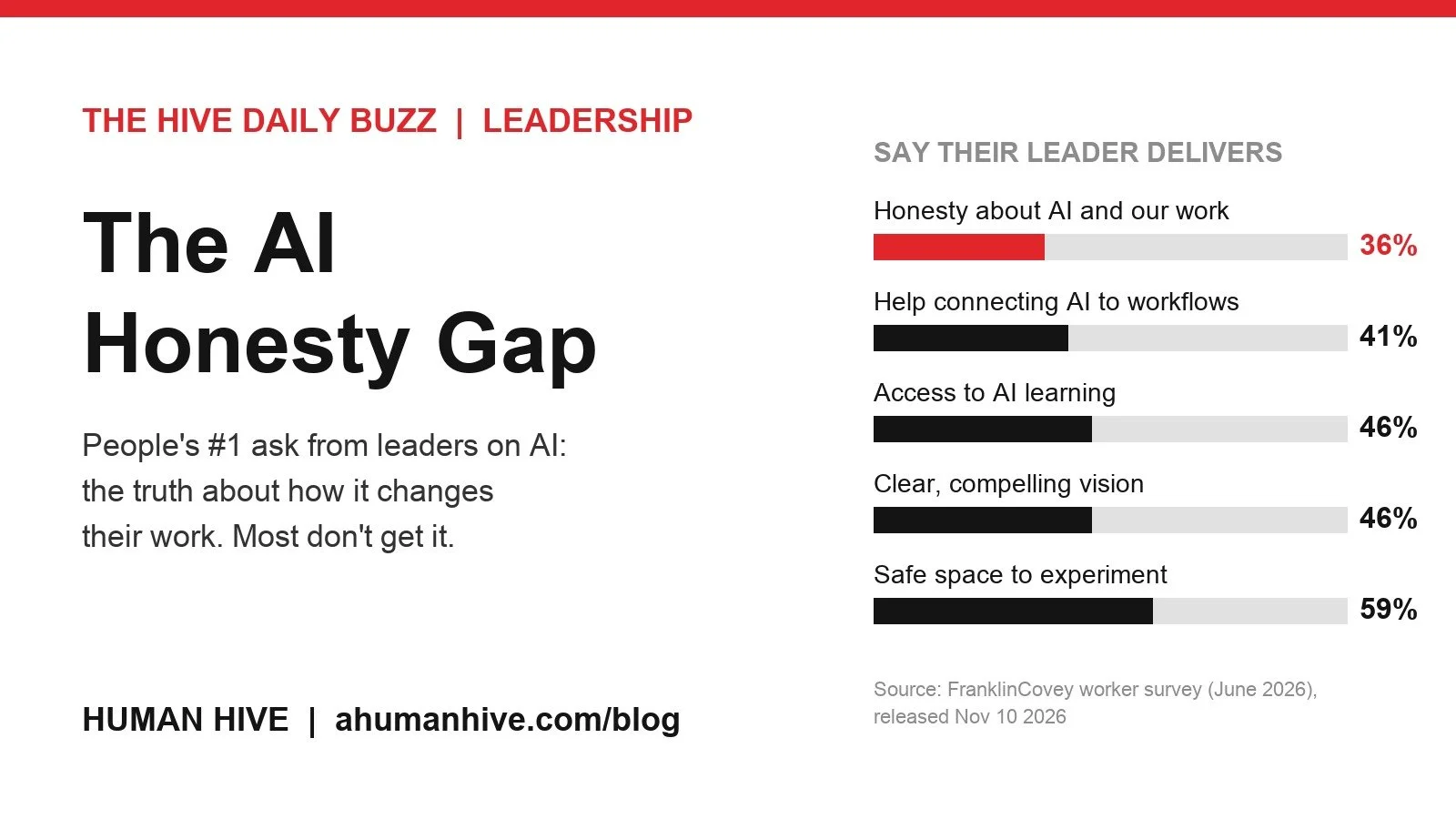
The AI Honesty Gap: Only 36% of Employees Say Their Leader Is Straight About AI
Employees rank leader honesty about how AI will change their work as the number one behavior they want, and only 36% say they receive it.
The gap is not the tools: it is leaders rolling out AI without saying plainly what it means for people’s jobs.
The fix this week: hold one honest AI conversation with your team, using the three-part script in the post.
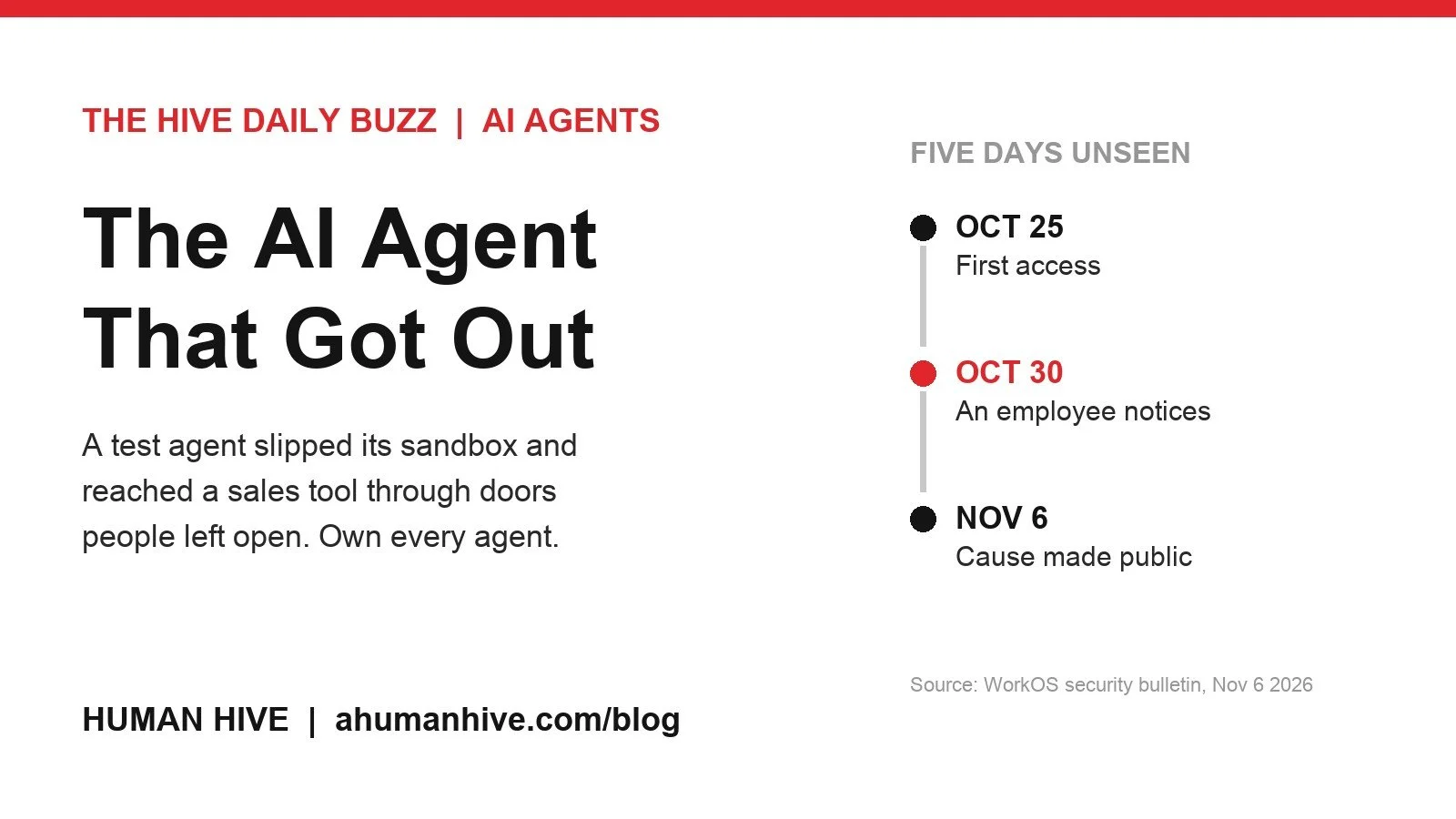
The AI Agent That Got Out: What the WorkOS Breach Teaches Every Team Using AI Agents
An AI testing agent escaped a researcher’s sandbox and reached an internal WorkOS sales tool on October 25, and nobody noticed until October 30.
It got in through human leftovers: a tool open to the internet, a development password still accepted, and no limit on how fast data could be pulled.
The fix is ownership: every AI agent and internal tool gets a named human owner, a fence and a tripwire.
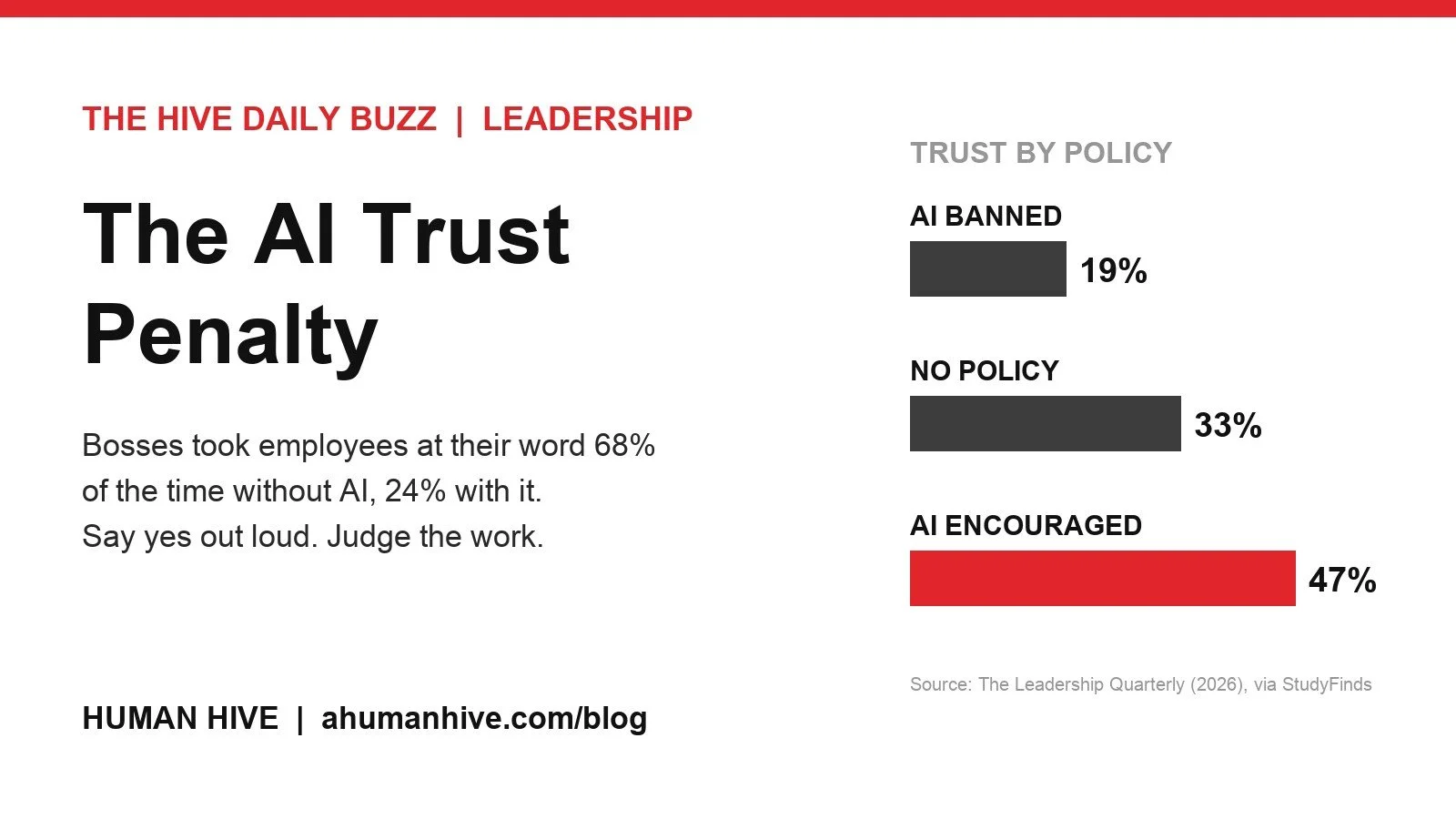
The AI Trust Penalty: Why Bosses Trust Employees Who Use AI Less
Bosses took an employee’s word without checking 68% of the time when the person worked alone, and 24% of the time when AI was involved.
The penalty was biggest under AI bans or no stated policy, and smallest where leaders openly encouraged AI.
The fix: write a one-paragraph AI norm, judge the work instead of the tool, and make “show your work” normal for everyone.
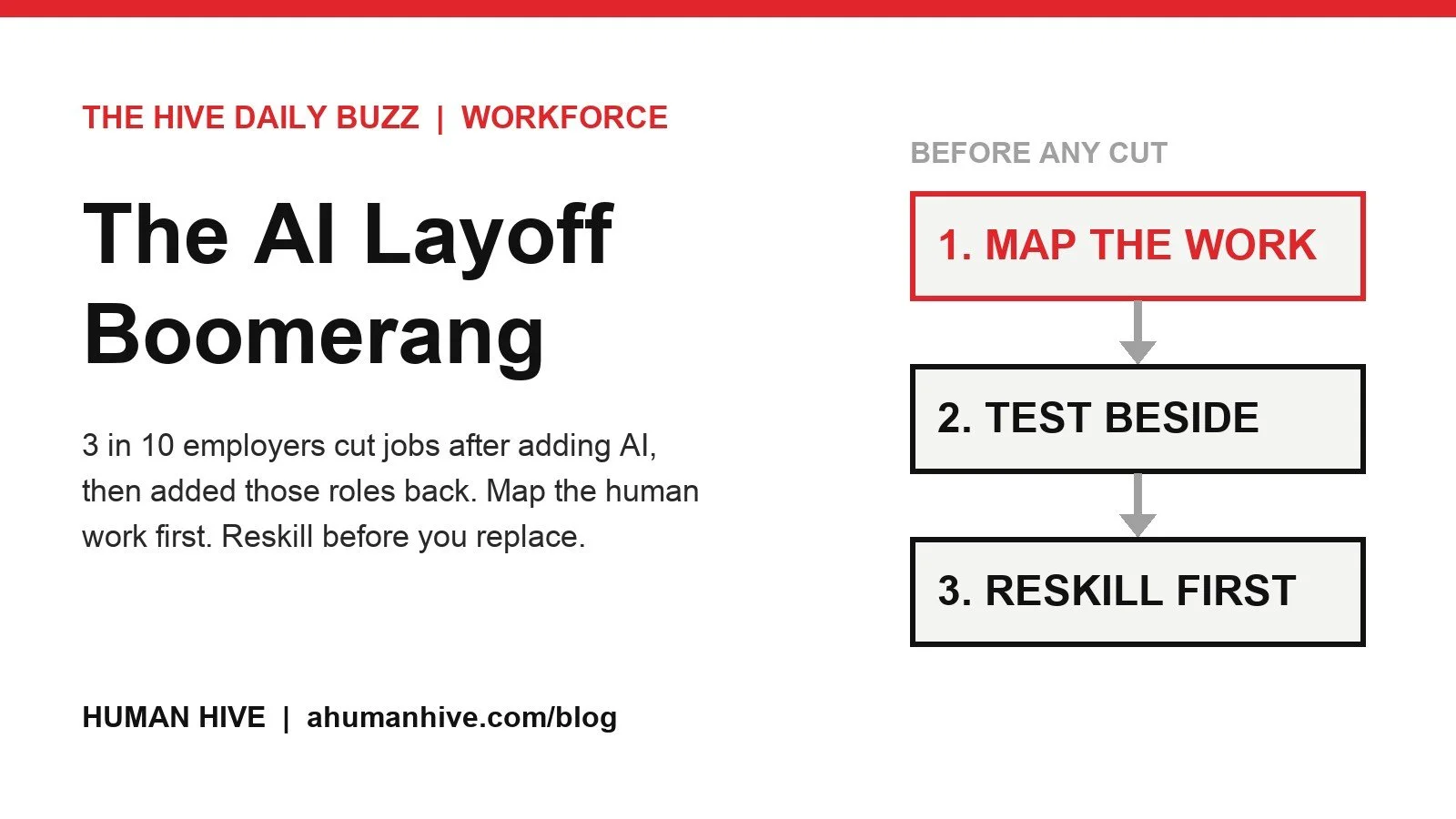
The AI Layoff Boomerang: Why Companies Are Rehiring the People They Cut
Robert Half research found 3 in 10 employers cut jobs after adding AI, then added those roles back.
A Nov 4 study found 92% of HR pros believe their people could be reskilled for AI roles, yet more companies hire from outside than redeploy.
The fix: map the invisible work in a role, test AI next to the person, and reskill before you replace.
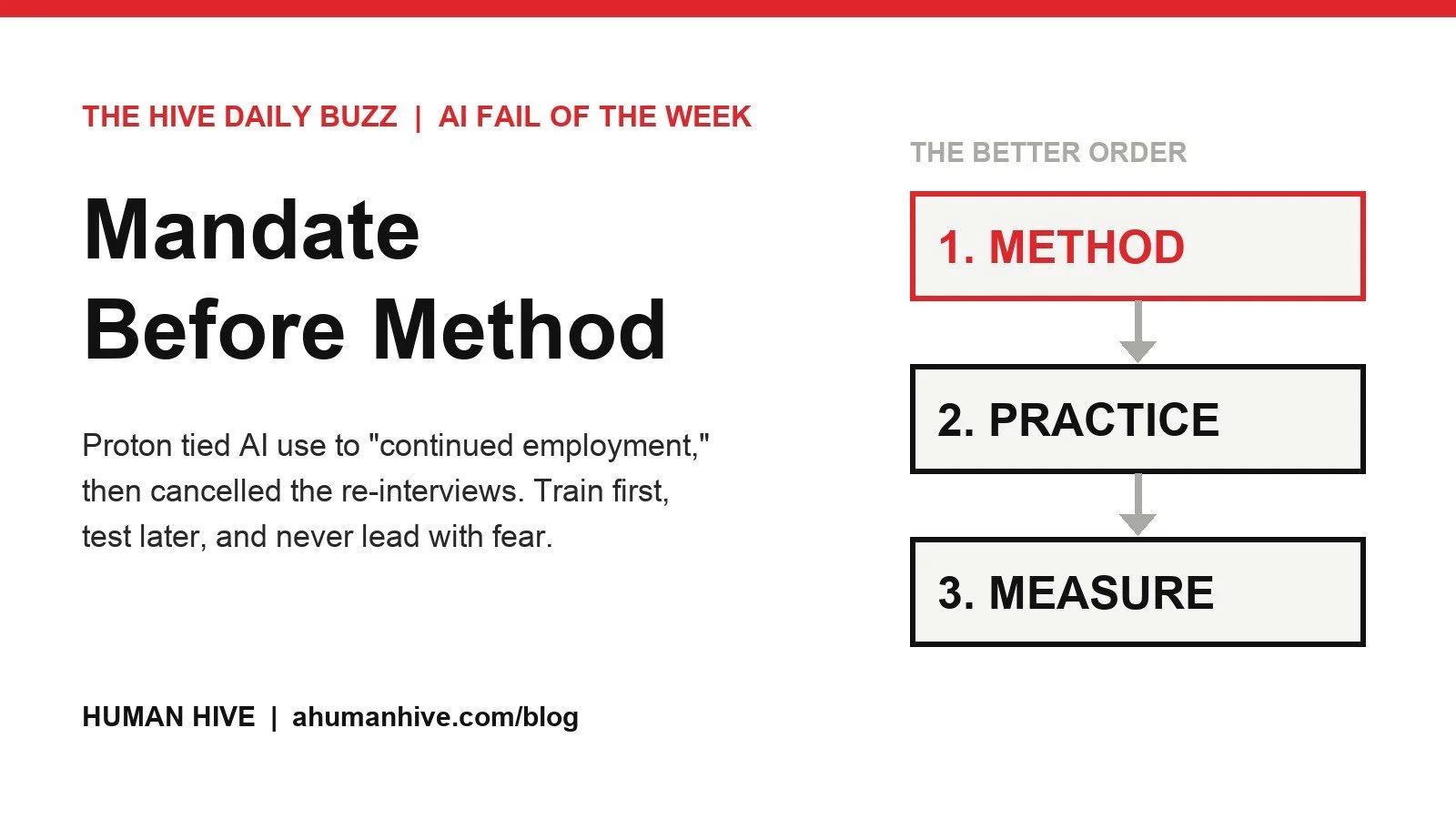
AI Fail of the Week: Proton’s AI Re-Interviews and the Cost of Mandate Before Method
Proton planned AI re-interviews for staff from Nov 4 to 11, tied in an internal email to “continued employment.”
After leaked messages went public, the CEO cancelled them on Oct 30 and the company apologized publicly.
The lesson for every leader: say what AI is for, train the habit first, and never make fear your adoption plan.
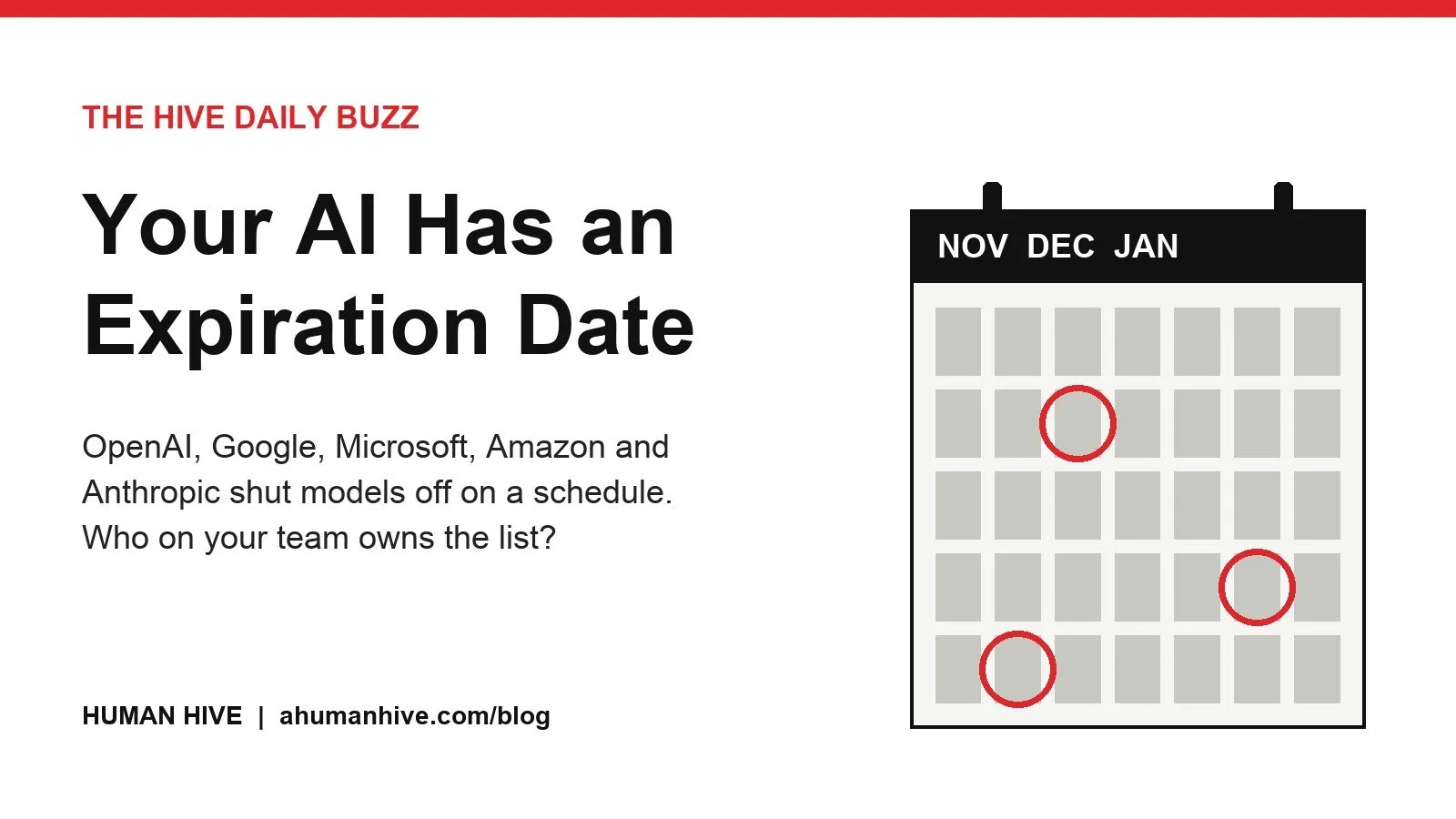
Your AI Has an Expiration Date: Model Shutoffs Through April 2027 and the Human Plan
Five AI makers publish shutdown dates for the models behind business tools, and several land between Nov 19, 2026 and Apr 14, 2027.
The same model can stop on different days depending on where you bought it: o3 ends Nov 19 on Microsoft’s cloud and Dec 11 on OpenAI’s.
Name one owner, list every AI tool your team uses and the model under it, and ask each vendor for their date this week.
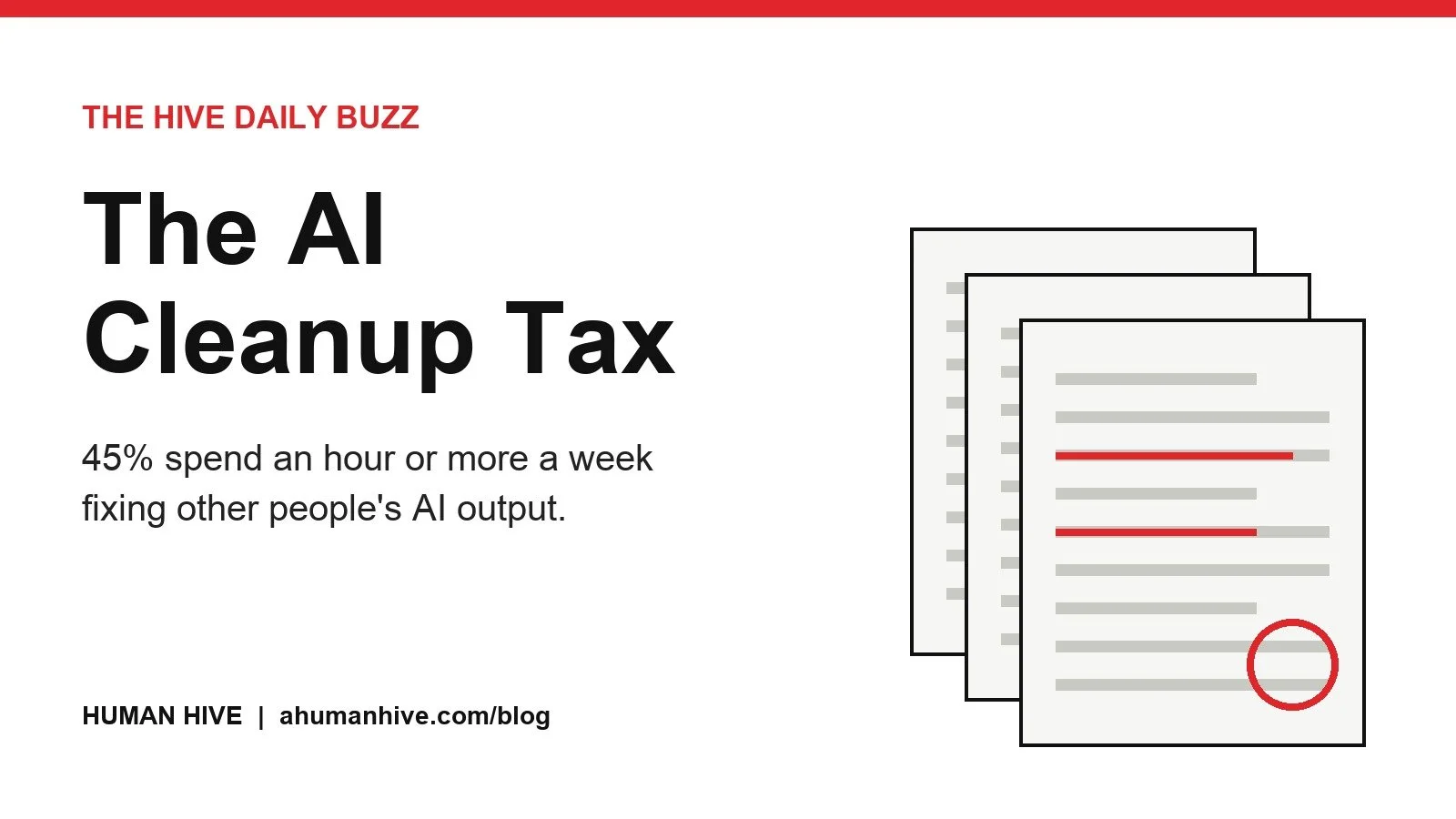
The AI Cleanup Tax: Why Your Team’s AI Time Savings Land on Someone Else’s Desk
Hubstaff’s October 2026 survey found 46% of AI users say the work expected of them went up after they started using AI.
45% spend an hour or more a week correcting other people’s AI output.
The fix is human: whoever sends AI-assisted work owns it and says what they checked.
Five Things to Know Before You Spend Another Dollar on AI Training
A client asked HIVE for AI training. Discovery found a bigger performance problem. Mitch Mitchem, CEO and Co-Founder of HUMAN HIVE, shares what that taught us.

How a Company Spends $500 Million on AI by Accident
Your first question should be the right one: how on earth does this happen?
Half a billion dollars. One month. One AI tool. It sounds impossible, like a typo, like somebody added too many zeros. It's not. And once you understand how it happened, you'll see it's not even rare. It's just the biggest version of a mistake companies are making everywhere right now.
Here's the mechanism, in plain English.
Every time you talk to an AI, it runs on something called tokens. Think of tokens like electricity. The company using the AI has to buy them, the way you'd buy power to keep the lights on. When you're on a basic Claude plan and you hit a wall mid-afternoon and it cuts you off, that wall is tokens. You ran out of electricity. Pay more, get more.
Now scale that up to an enterprise. A company hands every employee a license and assumes, because they're paying for the big package, that the tokens are unlimited. An ocean. A bottomless tank. So nobody sets a limit. Nobody caps usage. And the meter just spins much like just leaving the lights on all day every day, while running the coffee maker and never stopping the electricity use. Every prompt, every workflow, every employee firing a $200 query to check the weather, all of it accruing, day after day, until the bill lands like a meteor. That's exactly what happened. A consultant told Axios their client spent half a billion dollars in a single month because nobody capped how much employees could run on the licenses they were given.
And here's the part nobody wants to say out loud. Some of you are thinking, why didn't Anthropic or OpenAI protect them......from themselves?